Discover Morocco
Moroccan Culture: Languages, Customs and Creative Life
You meet Moroccan culture at street level: Darija slipping into French mid-sentence, couscous on a Friday, Gnawa rhythms in Essaouira, a zellige cutter at work in Fes. Behind each lies a mix of Arab, Amazigh, Saharan, Andalusian, African and Jewish influences, and the mix changes from one region to the next.
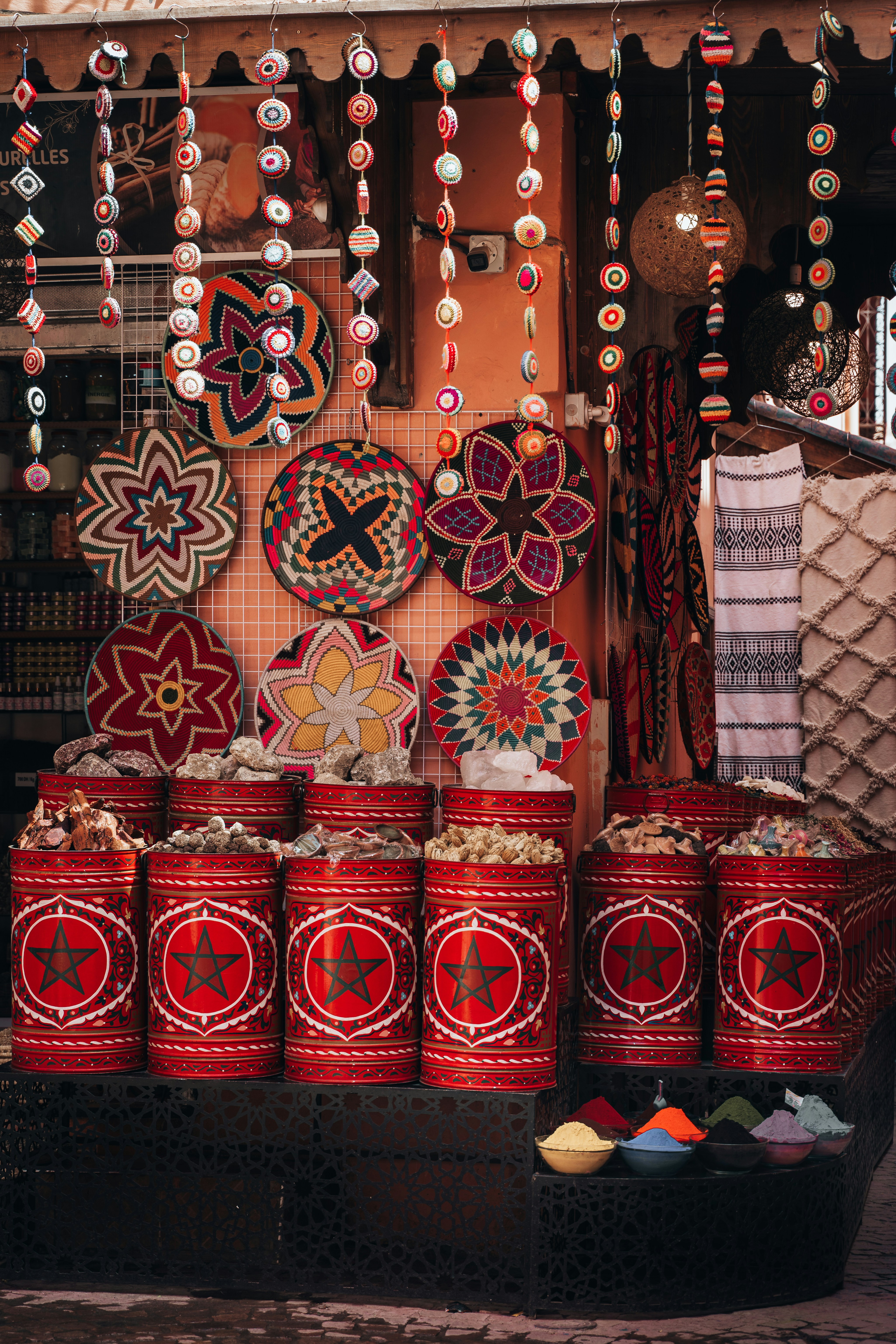
Several inheritances, overlapping identities
Morocco's 2011 Constitution describes a national identity formed from Arab-Islamic, Amazigh and Saharan-Hassani components, enriched by African, Andalusian, Hebraic and Mediterranean influences. Arab and Amazigh identities often overlap through family, language and place.
Amazigh culture is part of everyday life across the Rif, the Atlas and the Souss, and the Tifinagh script appears on some public signs. Saharan-Hassani culture, including the Hassani variety of Arabic, is associated especially with Saharan communities.
A celebration in the Souss, a concert in Rabat and a family meal in the Rif can all be Moroccan without looking or sounding alike.
Languages and everyday communication
Arabic and Amazigh are Morocco's official languages. Darija, Moroccan Arabic, is widely used in conversation, while formal Arabic has roles in writing, education and public life. Amazigh has regional varieties as well as a standardised form used in teaching and official contexts.
French, Spanish and English also have different roles, depending on the region, setting and people involved. French remains common in business and higher education, and Spanish is particularly useful in parts of the north.
Our Languages of Morocco guide explains these distinctions in more detail.
Faith and the calendar
Islam is the religion of the state, and prayer times, Friday midday prayers and Ramadan shape the rhythm of the week and the year. Most mosques are closed to non-Muslims; the Hassan II Mosque in Casablanca, which runs guided tours, is the main exception, and historic madrasas such as Bou Inania in Fes are open to visitors. During Ramadan some cafés and restaurants close by day, and the streets fill again after sunset: see Ramadan in Morocco.
Moroccan Jewish history is visible in synagogues, cemeteries and former mellahs (Jewish quarters) in cities such as Fes, Marrakech and Essaouira. Our Jewish heritage guide explores places associated with that history.
A moussem is a local festival, often held at a saint's shrine, that can combine pilgrimage, music, trade and family gatherings. The Moussem of Tan-Tan, an annual gathering of nomadic peoples of the Sahara, is on UNESCO's intangible heritage list. For dates, see our holidays and traditions guide.
Greetings, hospitality and etiquette
Take time over greetings: s-salam 'alaykoum (peace be upon you) works everywhere, answered with wa 'alaykoum s-salam, and the Darija phrasebook has the rest. Use your right hand to eat, pass food or hand over money. At a shared dish, eat from the part in front of you, using bread to scoop.
If you are invited home, follow your host's lead on seating, shoes and the pace of the visit, and expect to be offered mint tea. Ask before photographing people, and never photograph a private celebration without permission.
The Morocco Today guide looks more closely at households and changing social life.
Couscous, tagine and regional cooking
Couscous is the traditional Friday lunch, shared after the midday prayer. UNESCO inscribed the knowledge and practices around it in 2020, in a joint listing with Algeria, Mauritania and Tunisia. A tagine is first a conical clay pot and a slow-cooking method, so what goes inside changes with region and season. Bread is part of almost every meal, and mint tea is the standard offer to a guest.
Regional cooking follows the landscape: fish on both coasts, argan oil and amlou in the Souss, dates from the oases of the Drâa and Tafilalet. For dishes, ingredients and places to eat, continue to Tasting Morocco.
Crafts and where they are made
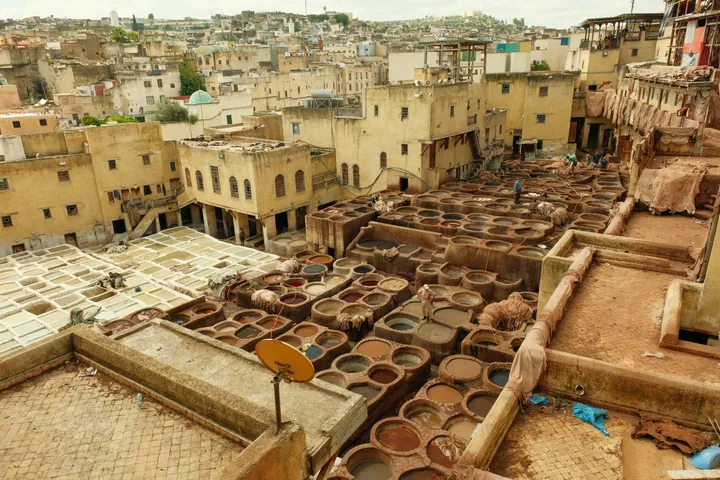
Many Moroccan towns are known for a particular craft. Fes is the historic centre of zellige, the mosaic of hand-cut glazed tiles, and its tanneries still work leather by traditional methods. Safi is the country's largest pottery centre. In Essaouira, woodworkers inlay boxes and furniture with thuya, a fragrant local wood. Rugs are woven across the Middle and High Atlas, home of the Beni Ourain and Azilal styles.
A shop may sell work made elsewhere, so ask where a piece was made and by whom. Workshops are workplaces: ask before you walk in or take photographs. To understand a craft, see it in a museum and then in a working studio; the museum explains its history, the studio shows the skill. Before you buy, read our souk guide.
Music, festivals and celebrations
Moroccan music spans several distinct traditions. Gnawa, with historical roots in communities affected by slavery and the slave trade, joins music, dance and ritual. UNESCO inscribed it in 2019, and Essaouira has hosted the Gnaoua and World Music Festival since 1998. Malhoun, sung poetry with instrumental accompaniment, joined the UNESCO list in 2023. In the mountains, collective song and dance take the form of ahwach in the High Atlas and Anti-Atlas, and ahidous in the Middle Atlas and eastern High Atlas.
The Fes Festival of World Sacred Music was founded in 1994. Tbourida, often called fantasia, is a synchronised horseback charge that ends in a single volley of gunfire; UNESCO inscribed it in 2021. Yennayer, the Amazigh New Year on 14 January, has been a national public holiday since 2024 and is often marked with local programmes of music, food and crafts.
Dates and line-ups change every year, so check What's On before you travel. The Moroccan music guide covers artists and styles.
Books, film and contemporary art
Storytelling and poetry link Morocco's oral traditions to a written literature in Arabic, Amazigh and French. Tahar Ben Jelloun (1987) and Leïla Slimani (2016) have both won France's Prix Goncourt. Rabat hosts the International Publishing and Book Fair (SIEL), and UNESCO named the city World Book Capital for 2026.
Visual culture spans painting, photography, sculpture, film and design. For visual art, start at the Mohammed VI Museum of Modern and Contemporary Art in Rabat. For film, the Marrakech International Film Festival was first held in 2001, and Atlas Studios near Ouarzazate features in our film locations guide.
For museums, galleries and cultural centres, use the culture and leisure directory.